About Active Harmonic Programmable Filter
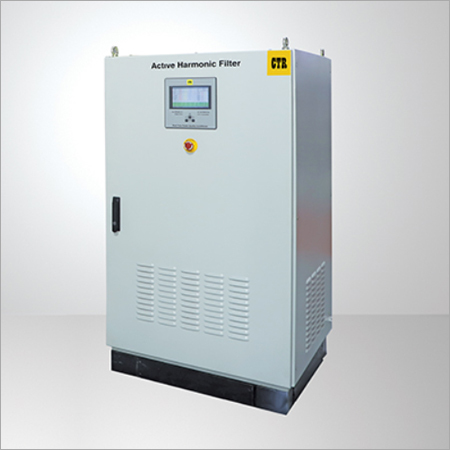
Active Harmonic Programmable Filter is a safety unit that is usually installed within power systems. It is fixed with parallel and series resonant circuits that help to reduce the harmonic currents within the supply systems to prevent damages due to distortions. It is equipped with safety elements that act as a safety barrier to prevent damages in case of surge voltages. Buy from us this high-performance Active Harmonic Programmable Filter as per your demands at a reasonable and low price range.
Features of Active Harmonic Programmable Filter
- Selective harmonics filtering, filtering efficiency > 96%
- Wide range rating from 15Amp to 300 Amp in a single cubicle
- Direct connection from 200 to 500V AC.
- Reactive power compensation per individual phase (0.7 capacitive to 0.7 inductive)
- High speed measuring, monitoring, analysing and acting device which acts within 25 micro seconds
- User selectable priority adjustment between Harmonics, PF correction and load unbalance compensation
Advanced Harmonic Compensation for Industrial ApplicationsThis filter is specifically designed to address power quality challenges in industrial environments, efficiently compensating harmonics in the 2nd through 50th orders while maintaining system stability. With a rapid response time of less than 25 milliseconds, the filter ensures seamless operation, making it an essential asset for any facility dealing with harmonic distortion.
Robust Construction with Enhanced Protection FeaturesAlways prioritizing safety and longevity, the unit is housed within a powder-coated, IP42-rated metal enclosure. It includes comprehensive protections such as overvoltage, overcurrent, short circuit, and overheating safeguards. The panel door interlock and audio-visual alarm system enhance operational safety and convenience.
User-Friendly Operation and Flexible IntegrationThis filter integrates easily into existing power distribution frameworks via panel mounting or terminal blocks. RS485/Modbus communication and a clear LCD digital display support straightforward configuration, while programmable modes allow tailored performance to suit a range of industrial needs.
FAQs of Active Harmonic Programmable Filter:
Q: How does the active harmonic programmable filter improve industrial power quality?
A: By compensating for harmonics in the 2nd to 50th range in real time, this filter reduces harmonic distortion, improves power factor (0.98), and stabilizes system performance in industrial LV and MV distribution networksresulting in greater equipment longevity and operational efficiency.
Q: What is the installation process for this filter and where should it be mounted?
A: The filter is designed for easy panel mounting using screw terminals or a terminal block and fits neatly into standard enclosures. It is wall-mounted, with a compact design (600 x 450 x 220 mm) and can be installed in locations below 2000 meters altitude, as long as the ambient temperature is between -10C and +45C.
Q: When should a facility consider using an active harmonic programmable filter?
A: Deploy this filter when experiencing recurring issues such as overheating, equipment malfunction, or unexplained downtime linked to harmonic distortion. If consistent performance or compliance with power quality standards is essential, this solution becomes especially beneficial.
Q: What are the communication and control features of this filter?
A: The filter is microprocessor-controlled and offers seamless integration with industrial systems via RS485/Modbus communication. It provides both digital and analog output options, and its modes can be programmed in real time for maximum flexibility.
Q: How does the filter ensure operational safety and reliability?
A: It comes equipped with a panel door interlock, multiple protective features (overvoltage, overcurrent, short circuit, overheating), and provides immediate audio-visual alarms for rapid fault identificationhelping maintain a safe and reliable environment.
Q: What maintenance is required to ensure continued effective performance?
A: Routine inspection should focus on the forced air cooling system, dust accumulation, and tightening of connection terminals. Periodic verification of LCD display readings and alarm function tests will help ensure sustained and optimal performance.



 Send Inquiry



 Send Email
 Send Inquiry

 Send Inquiry

 Send Inquiry
 Send SMS
 Call Me Free


